Photo Živa Slavec
Besnica Breg
Vivianite - Blue clay
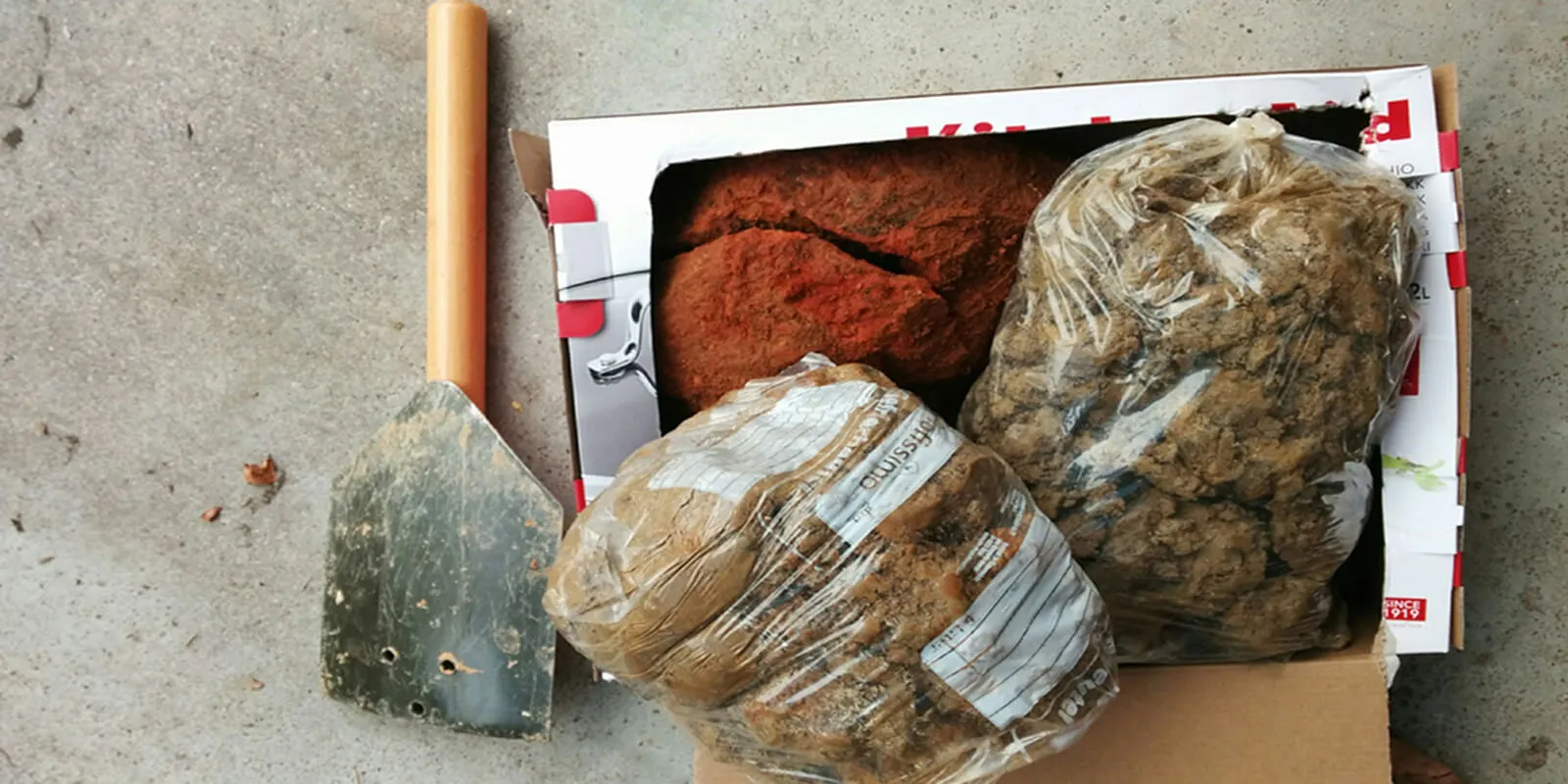
When we, as small children, explored the area, the name "V bregu” (“On the bank") meant a place that was dark, damp, and sinister. A precipitous and steep terrain that leads to the Sava River in the northern part of the valley. The opposite of the mostly sunny, pleasant forests in the Besnica Valley. A place that is different, place of death, a place of weathering, a place of disposal (slaughterhouse waste, old stoves ...). We were always walking fast and quietly through it. Later, it began to interest us - we rummaged through the gigantic conglomerate boulders, searched for holes in them. Underneath, we collected the clay from which we made our first products, and over them, we collected stones of red and yellow ochre colour with which we then painted asphalt or concrete at home.
I recently returned to this place to explore the claims of older villagers that they used to go there to collect clay and used it to make bricks and simple pots for black kitchens.
Geologically, this is a narrow river valley with conglomerate deposits, above and below them are layers and pockets of clay. In the upper part, the clay was redder and in the lower part, greyer.
In the layer of grey clay, Anja and I encountered a lump of vividly blue clay. We dug it out and wrapped it in a plastic bag, but on the second day, the clay lost its vivid blue colour. All we had left were photos. After exploring the web, however, we found that it was possible that we discovered a mineral vivianite, which is present in moist and dark environments where phosphorus and iron oxide react from the organic matter (e.g. bones, teeth, old wood ...) to the mineral vivianite that gives a blue pigment. Initially, this is a very unstable meta-vivianite, which, however, later becomes stable after it petrifies.
In art history, it is known for its use in painting, and it replaced sometimes the expensive and hard-to-reach pigment lapis lazuli that was acquired in Afghanistan and Iran from the lazurite mineral. Like red and yellow ochre, the vivianite is also a form of hydrated iron.
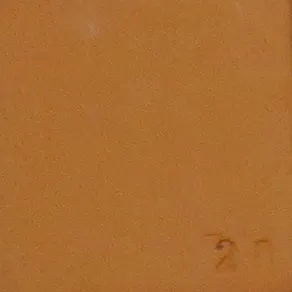
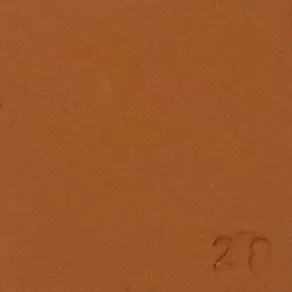
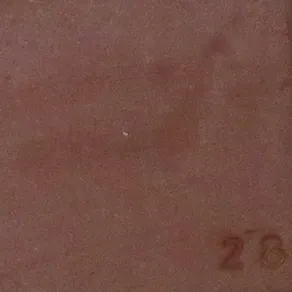
Sample 28 is clay from Besnica Breg (Upper Carniola). The recommended firing temperature is 900–1050 °C. The beginning of sintering is at 1050–1250 °C. At 1100 °C shrinkage is 11 % and porosity 4 %.
Clay samples
 800 °C
 900 °C
 1000 °C
 1100 °C
 1200 °C
 1300 °C
- segrevanje
heating up - priporočena temp. žganja
recommended firing temperatures - začetek sintranja
the beginning of sintering - mehčanje
softening
Clay preparation for testing
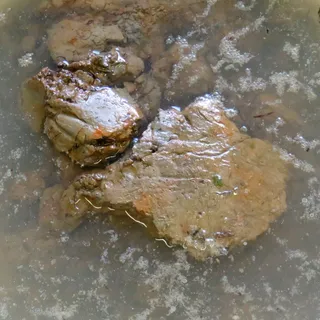 unprocessed clay
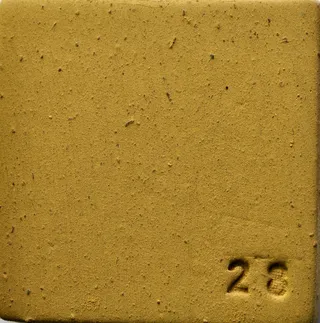 sifted and dried clay
- grain size in mm
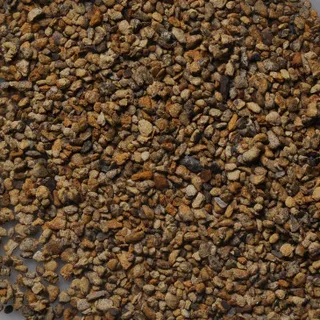 0.1 % = 1.0 mm
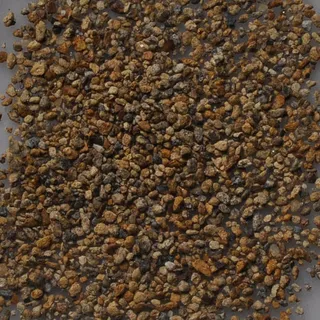 0.6 % = 0.2 mm
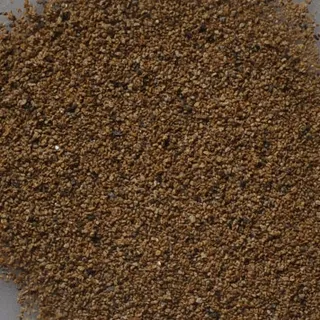 0.3 % = 0.05 mm