About
A three-year project by Urban Magušar on Slovene clays, traditional pottery and its place in contemporary design.
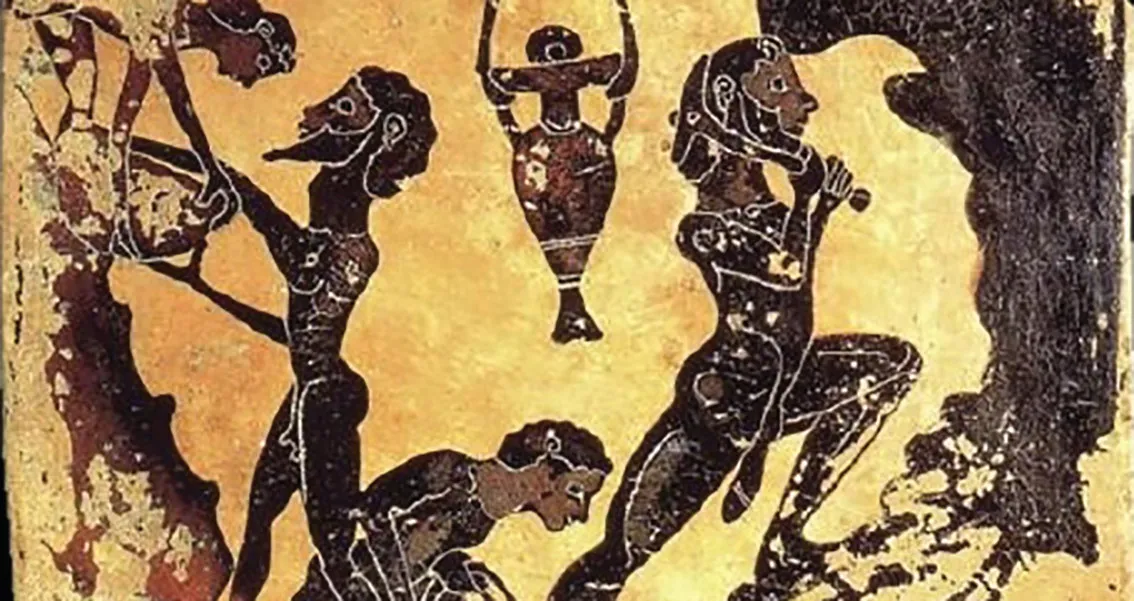
Catalogue of Slovene Clays
When designing ceramics, we use a wide variety of materials – clay, glazes, oxides, etc., which are obtained in specialized stores with ceramic materials and equipment. On the market, the clay can be found of all colours, without grog or with it, clay for raku technique, paper clays, various types of porcelain, clay with different effects and many others.
It is probably very difficult to imagine how important the local clay deposit was for the potter. The characteristics of the local clay influenced the pottery development. The method of preparing the material, the design technique, the decoration and the general pottery were dependant on them. The colour and thickness of the pot, the production method, the details, such as edges, handles, firing and the gloss of the glaze, all these depended on the clay and other materials that were available at the local, nearby deposits. The research of the details of the traditional pottery production led me to the features that are common to the potters from a certain area, and to some that are common to all the Slovene traditional potters. These characteristics are part of our pottery tradition and they still continue to impress me today.
I wanted to bring these details closer to young, modern designers so that they would recognise them as part of our tradition and use them when designing modern products.
During a three-year project called the Catalogue of Slovene Clays, I organized an accumulation of clay samples from all the Slovene regions in the first year. 28 participants accepted the invitation and brought more than 100 samples from 69 locations to the workshop. I tested the clay during our workshop in Magušar's House in Radovljica. I was interested in basic physical properties: shrinkage, porosity, colour, and granulation. The samples were fired at temperatures ranging from 800 to 1300 degrees Celsius. I was trying to determine the temperature range of sintering and melting. The results of the tests were shown at the first exhibition on 18 May 2018 in Magušar’s House in Radovljica.
In the second year, in the second part of the project, I dedicated myself to the traditional Slovene pottery made from these clays. I selected about one hundred of the most interesting pottery examples from the depots of Slovene museums and documented their design features, the colours of the materials and the variety of design details. The focus was on finding and establishing the logical connections between the local clay deposits and the final properties of clay products, on the characteristics in which Slovene traditional pottery differs, and in particular on which design elements are the most important and most characteristic of Slovene pottery. Since younger generations of designers use significantly different tools in their work than traditional potters did, I digitalised the shapes, details and decoration of the pottery, making them easier to use in design. The results were shown together with pottery and test clay samples at a second exhibition in May 2019 at the National Museum of Slovenia in Metelkova, Ljubljana. The Catalogue of Slovene Clays exhibition was later also shown in Škofja Loka (2020) and at Center Rog in Ljubljana (2024).
In the third part, I encouraged designers to create ceramic products that meet the needs of the present time while carrying elements of traditional pottery. We wanted to fill modern Slovene traditional pottery with a vision of a better future.
Urban Magušar – the author of the Catalogue of Slovene Clays project
Why I love clay
I am enthused about the fact that the clay can be found almost everywhere below our feet. We walk on it and it will never run out. If we add water to it, it can be kneaded, shaped into images and bowls. To clay, just like it does to us, the water means a source of life that tempts it to come to life in new forms. While playing with fire, “Keramos” does not let us near during the firing because of the extreme heat. There are no corrections and “Sorry, I made a mistake. Can I make this little handle smoother?” during the firing process. We only meet the products again after the kiln has cooled down. And in the end, our muddy creation can become the object of permanent admiration.
Urban Magušar
Magical clay
When the water ran out, the mud was left. People came. With the great desire for survival, they learned the process of firing clay. With the great desire for progress, this process was also (abandoned) forgotten.
Martin Skoliber
How to read the catalogue
Every sample has its own panel or page with the same structure:
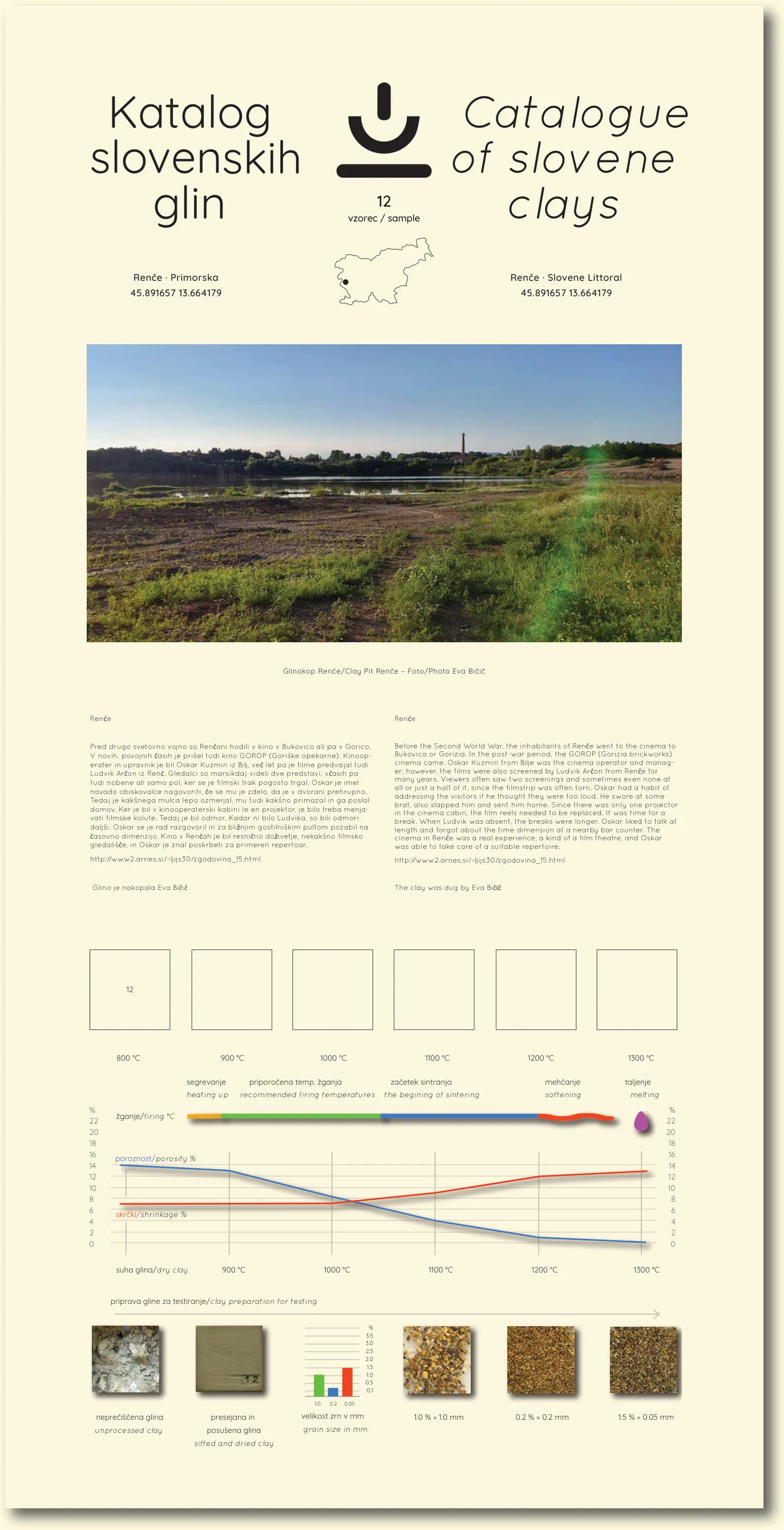
- sample number
- place, region, coordinates
- photograph
- story
- graphic presentation of the test results
- colour of the fired clay at different temperatures
- porosity
- shrinkage
- granulation
The first exhibition opened on 18 May 2018 in Magušar’s House in Radovljica as an accompanying event of the 4th International Ceramics Triennial UNICUM 2018.