Photo Živa Slavec
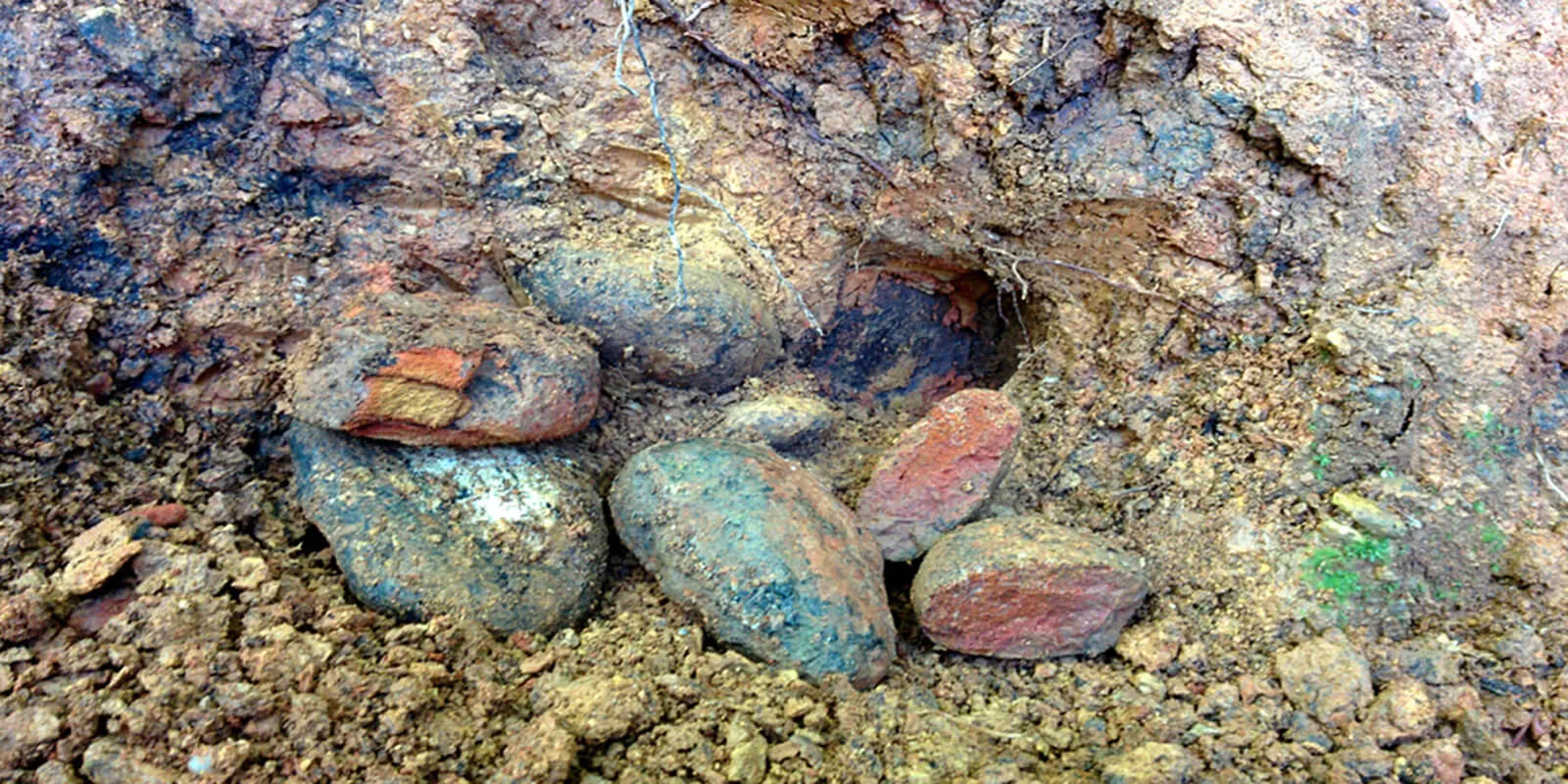
Bobovek
A thirteen-meter deep excavation opened an interesting view of about three-hundred-thousand-year-old past. In 1953, when they were digging clay in Čukova jama (Little Owl cave), a mammoth skeleton was excavated at a depth of 8.5 m under the surface. On the basis of its weak bones, they conclude that it is a female, and according to worn down molars, they deduce that she was over forty years old at the time of her death. She probably walked into the swamp and sank into there, or she was chased off by ice-age hunters who probably lived in this area. They also discovered an urn cemetery from the 2nd Century AD during the Roman Empire. In 1965, the remains of a common dace, a fossil fish that lived during the mammoth period, were found at a depth of 8 m. The remains were around 180,000 years old.
Sample 44 is clay from Bobovek (Upper Carniola). The recommended firing temperature is 900–1150 °C. The beginning of sintering is at 1150–1250 °C. At 1200 °C shrinkage is 17 % and porosity 1 %.
Clay samples
 800 °C
 900 °C
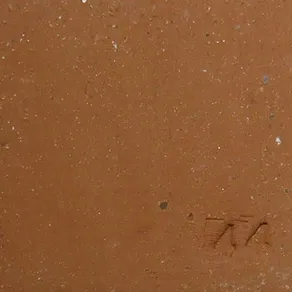 1000 °C
 1100 °C
 1200 °C
- segrevanje
heating up - priporočena temp. žganja
recommended firing temperatures - začetek sintranja
the beginning of sintering - mehčanje
softening
Clay preparation for testing
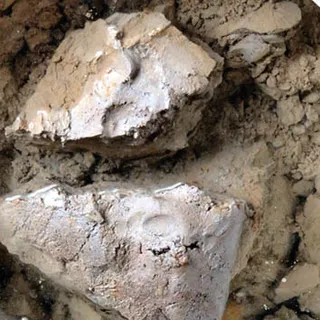 unprocessed clay
 sifted and dried clay
- grain size in mm
 2 % = 1.0 mm
 1 % = 0.2 mm
 0.5 % = 0.05 mm