Photo from the web
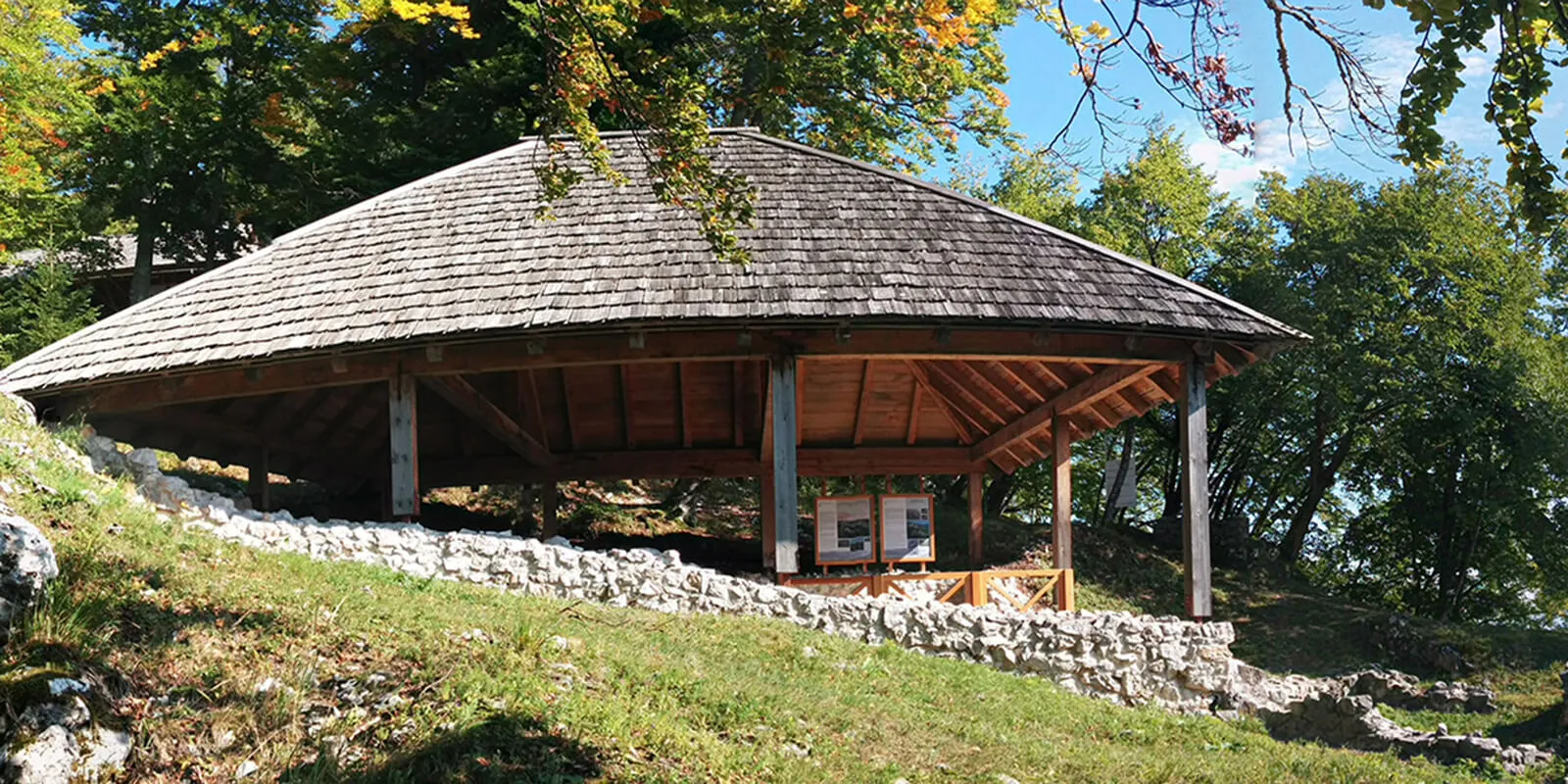
Ajdna
The legend says that the Heathen Maiden was sitting on top of Ajdna and was soaking her feet in the Sava River.
Based on the discovery of the stone axe, the oldest settlement dates back between the 3rd and 2nd millennium BC. The hill was once again settled in Roman times. The remnants of the settlements from this era were found on the lower settlement terrace. The settlement achieved its prosperity in late antiquity, which is in the 5th and 6th Centuries. During this time, it offered shelter to the inhabitants from the immediate vicinity and supervised the important connection that led from Kranj through the Sava Valley to the north and then to Italy at the same time.
The excavations that have been taking place on the settlement since 1973 have revealed an early Christian church and several residential buildings. According to the configuration of the terrain, there were allegedly about 20 buildings on the hill. The settlement was abandoned in the second half or at the end of the 6th Century. In the building that was researched in 2003, a vast layer of charred ruins was found and a skeleton with a spearhead. Both indicate that the object was destroyed during the battle.
Sample 65 is clay from Ajdna (Upper Carniola). The recommended firing temperature is 900–1150 °C. The beginning of sintering is at 1150–1300 °C. At 1200 °C shrinkage is 8 % and porosity 4 %.
Clay samples
 800 °C
 900 °C
 1000 °C
 1100 °C
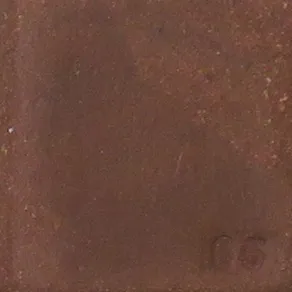 1200 °C
 1300 °C
- segrevanje
heating up - priporočena temp. žganja
recommended firing temperatures - začetek sintranja
the beginning of sintering
Clay preparation for testing
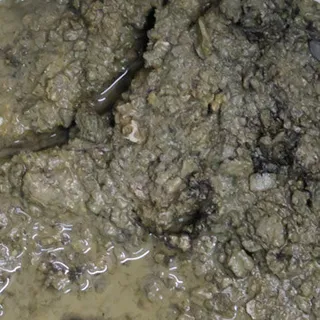 unprocessed clay
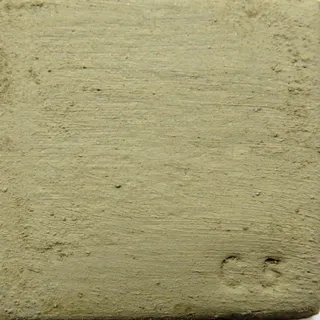 sifted and dried clay
- grain size in mm
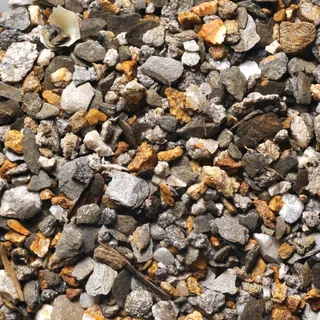 3.4 % = 1.0 mm
 0.5 % = 0.2 mm
 0.3 % = 0.05 mm