Photo archive Alenka Gololičič
The brickwork in Ušnik
A lot of clay can be found in the Soča valley - along the river, streams and on marshy meadows. The Soča clay contains limestone with different granulations and is not usable without thorough preparation, since the limestone particles are hygroscopic after firing and cause cracking of products.
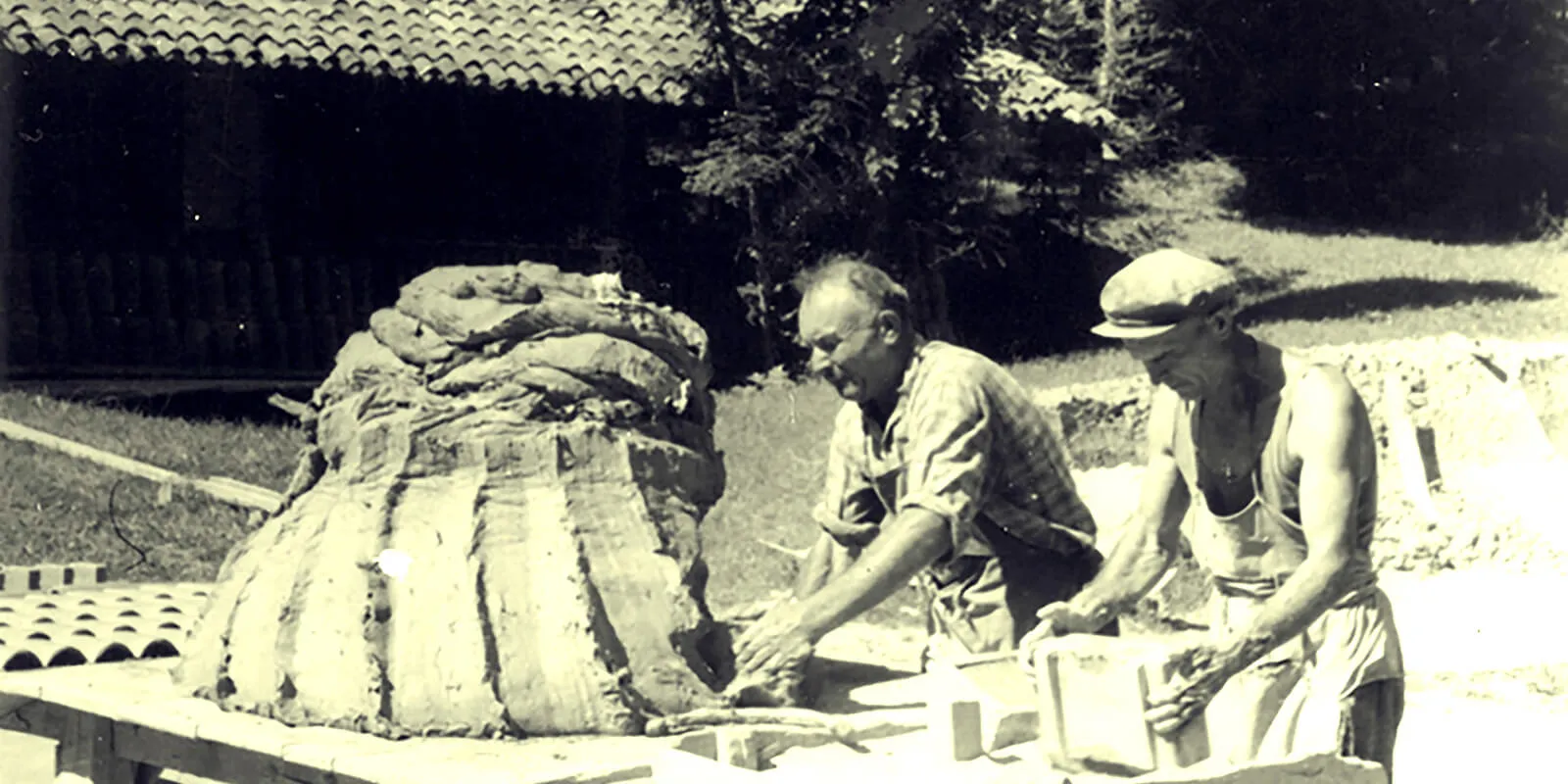
Before the First World War and during both wars, a significant number of bigger and smaller brickworks operated in the area of Kanal, Tolmin and Kobarid. Particularly after the First World War, the need for building material was great throughout the Soča valley and therefore, many small and large brickworks operated that were later closed. The brickworks in Ušnik was the last one to close its doors after the Second World War. Like elsewhere in Slovenia, the roof covering was made from local clay: brick slips, roof tiles, bricks and sometimes useful utensils, pots. At Laštar’s in Ušnik, they dug and delivered clay during winter months. They mixed bright loam, which is called Ju, together with darker and greasier loam. In May, they started working outdoors - both types of loam were thrown on the pile, called Kolač (Cake), on a flattened out and rolled out ground, it was well-soaked and moulded with bare feet. The well-moulded mass that was suitable for shaping was called Malta (Mortar). The brick slips and bricks were shaped in the mould, whereas the roof tiles around a person's thigh. The products were dried in the sun and they always had to be on a prowl, so that a sudden storm would not wet the drying products. The dried products were stored in a shed and fired in the autumn after St. Michael’s Day. They supplied the Tolmin and partially the Kanal and Kobarid area with roof tiles and bricks.
Sample 34 is clay from Ušnik (Slovene Littoral). The recommended firing temperature is 900–1200 °C. The beginning of sintering is at 1200–1300 °C. At 1200 °C shrinkage is 6 % and porosity 5 %.
- segrevanje
heating up - priporočena temp. žganja
recommended firing temperatures - začetek sintranja
the beginning of sintering
Clay preparation for testing
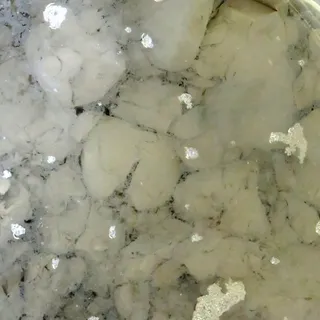 unprocessed clay
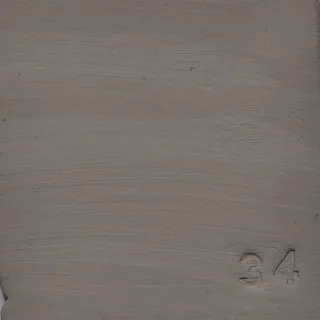 sifted and dried clay