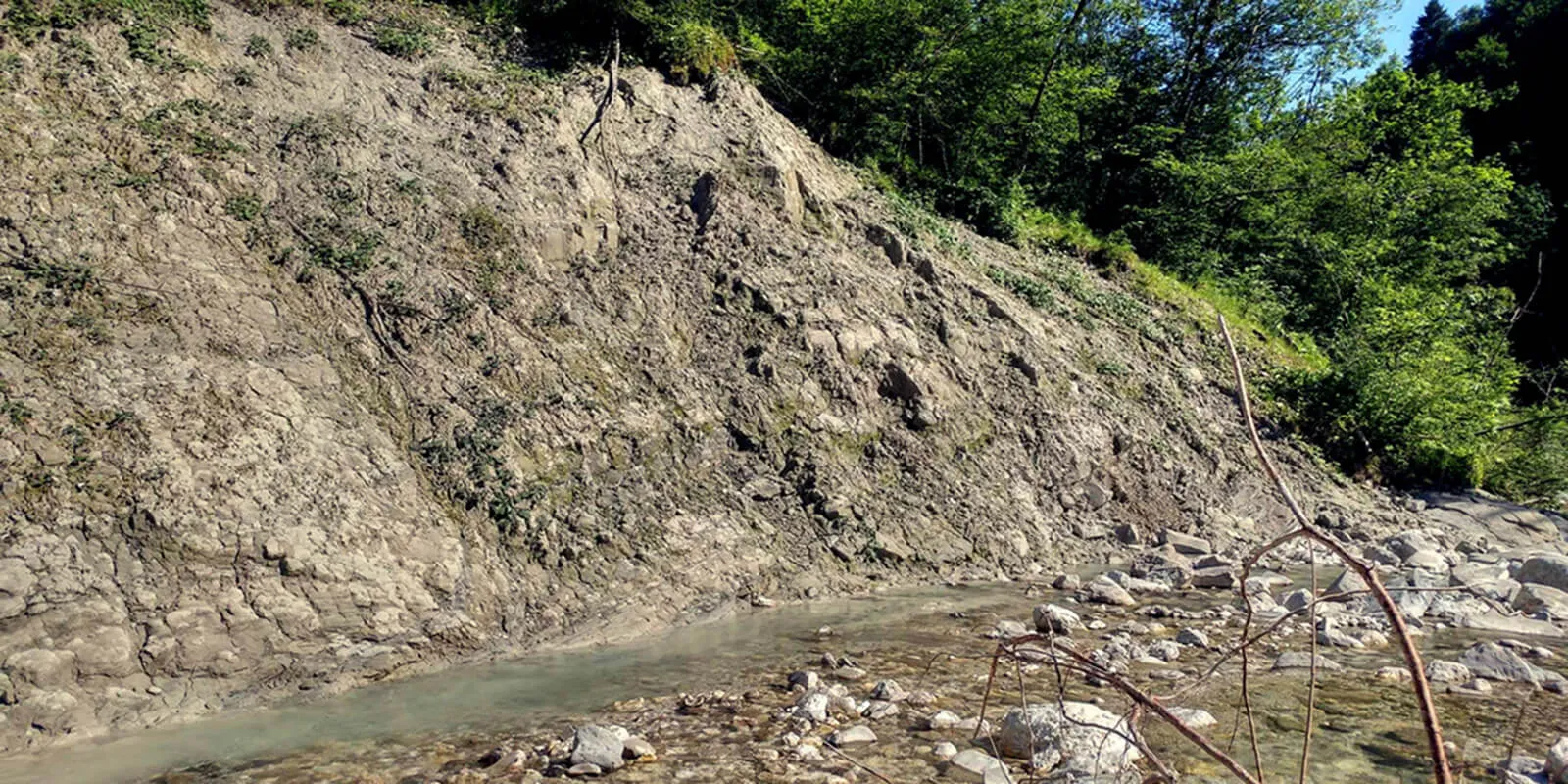
Photo Eva Bičič
The Natisone river
The Natisone means water that flows to the surface with a strong source. The source of the Sava Dolinka River in Planica has the same name and meaning. “Nadiža” (Nati- sone) is a genuine Slovenian name and cannot be interpreted from another language. On the map, it is called the Natisone, under Aquileia, but as a strong source of ground- water, it is known as the Natissa. The name is known already from the ancient Roman period. At that time, the Natisone was the main river of the eastern Friuli and according to the geographer and historian Czörniga, the Soča River flew into it. The ancient Romans did not know the today’s course of the Natisone. Pliny lists it among the rivers flowing between Timava and Plave [Piave] into the sea but is not familiar with the name Sontius (the Soča River). Paulus Diaconus describes a number of floods in 585 A.D. throughout the northern part of Veneto. At that time, many rivers changed their riverbeds. In 1490, there was the second major flooding and, supposedly, it was only then that the Soča River between Villesse and San Pier d'Isonzo turned to the south, moved from the tributary Torre to the Natisone. The old riverbed of Torre in Lower Friuli cannot be seen anywhere now. Only the last estuary, still known as the Natissa, is remi- niscent of a strong navigable river flowing under the great Roman Empire of Aquileia towards Grado into the sea. The old Soča River, which would flow into the Natisone, formed the borders of Italy during the Roman period. On its banks, great battles for the superiority between the west and the east took place. However, according to the remains of the Roman buildings, roads and bridges, Carlo Dr. Gregorutti (Archeografo Triestino) is likely to prove that the Soča River was always running along its own river- bed from Gradišče down at the foot of the Karst and was flowing into the 'Lacus Tima- vus', which is today a swamp under Tržič (Monfalcone) near Lokavec. At that time, the Torre and the Natisone rivers ran straight towards the south into the current riverbed of the Natissa. The name Natisone would, therefore, indicate that the Slovenian shep- herds and herdsmen are an ancient tribe that lived in the area from the Carnic Alps to the sea even before the Romans and Aquileia. (Henrik Tuma, Izza velike vojne)
Sample 09 is clay from Nadiža (Slovene Littoral). The recommended firing temperature is 900–1200 °C. The beginning of sintering is at 1200 °C. At 1200 °C shrinkage is 22 % and porosity 0 %.
Clay samples
 800 °C
 900 °C
 1000 °C
 1100 °C
 1200 °C
- segrevanje
heating up - priporočena temp. žganja
recommended firing temperatures - začetek sintranja
the beginning of sintering - mehčanje
softening
Clay preparation for testing
 unprocessed clay
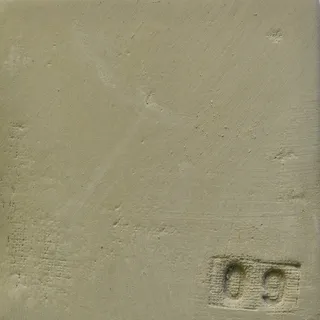 sifted and dried clay