What is ceramics
This is the first question that everyone who is interested in ceramics faces. It seems to be a simple question with a clear answer - fired clay. Despite the unambiguous answer, this question creates a space for discussions, theories, criticisms and new creative approaches that separate the profession. I see a clear division between the so-called traditionalists and contemporaries. The traditionalists define ceramics as a medium which must be respected by preserving and handing down its tradition and history. The characteristics of ceramics are respected; the work must preserve the soul and the character of ceramics. According to their opinion, verifying the rules, techniques and searching for limits shows disrespect for tradition and material. The term ceramics refers to fired clay, using proven techniques. It should not be broken or cracked, since it is considered as a mistake that shows an author's ignorance. Errors are not perceived as a part of the form or as a characteristic of material and media, but as an inability to control the material. The traditionalists master the technology of ceramics that constantly motivates them to research further and develop recipes - but always in accordance with the material and its tradition. On the other hand, the contemporaries are those who understand ceramics as a medium in which they can express themselves without burdening themselves with the preservation of the character and the soul of the material. They consider ceramics in the widest possible context. It is seen in combination with other materials, as a raw material, a material that breaks and thus expresses something. Ceramics is a material that opens infinite possibilities for design and creativity with its characteristics. It appears in various forms and roles. It is shaped in its raw, sculptural form and it can be poured onto or smashed in its fired state. It is a material of countless states that can be used for an installation or performance. They break the basic rules to achieve the desired effect.
I am more and more aware of and feel this split. I am faced with questions whether this is still ceramics, but more often with this is not ceramics or ceramics is of course merely a craft and what this kitsch is. At that point, I take a breath and think of Tonny Cragg, a sculptor who expresses himself in all materials and has a top-end opus of ceramic works. I think of Paul Scott, who had analysed the entire series of Spode ceramics for his doctoral research, who had explored all types of transfer printing in great detail and whose work ranks foremost among world’s ceramics. I think of Ai Weiwei who swept the entire Chinese politics with his iconic triptych Dropping a Han Dynasty Urn. Or Grayson Perry, the winner of the Turner prize, who combines everything possible in his work: tradition, surface treatment and social criticism. In front of my eyes I see the work of Wouter Dam, who throws all his sculptures and at the same time, with the purity and perfection of performance, he bows to the mastery of wheel thrown pottery. I think of Piet Stockmans and how he moves gently and honestly with his work from design to installation. Or Karina Marusinska, whose performance leaves indelible traces on her functional ceramics. Alexandra Engelfriet, whose studio is surrounded with clay; it lives with her, it became her life companion. She transforms it with each step, leaves her contours on it, she touches it like she would touch a fellow man. And then I remember the brilliant Edmund de Wall, the author of several greatest books on ceramics, whose love of his life is the porcelain that he throws and throws ... and presents it as installations. And Clare Twomey, who makes every visitor aware with her work that she is aware of the space and moment in which she lives, and in that moment, I wish that all the profession would unify and realize that the cooperation between the traditionalists and contemporaries is necessary for the future of topmost ceramics.
Sample 51 is clay from Grahovo ob Bači (Slovene Littoral). The recommended firing temperature is 900–1100 °C. The beginning of sintering is at 1100–1300 °C. At 1100 °C shrinkage is 4 % and porosity 6 %.
Clay samples
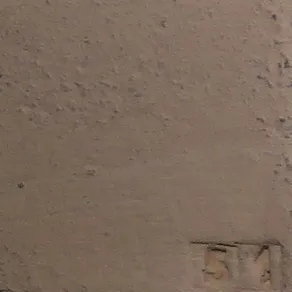 800 °C
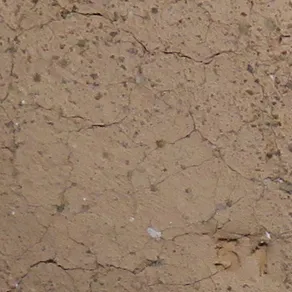 900 °C
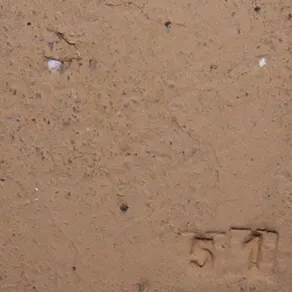 1000 °C
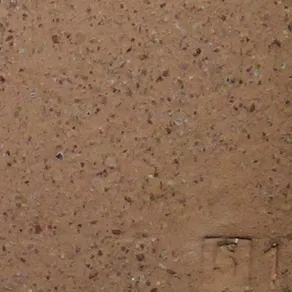 1100 °C
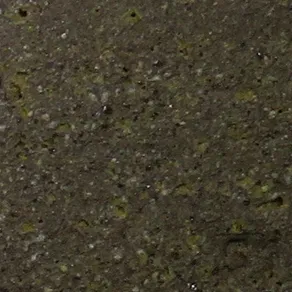 1200 °C
- segrevanje
heating up - priporočena temp. žganja
recommended firing temperatures - začetek sintranja
the beginning of sintering
Clay preparation for testing
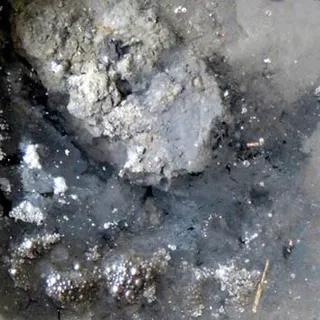 unprocessed clay
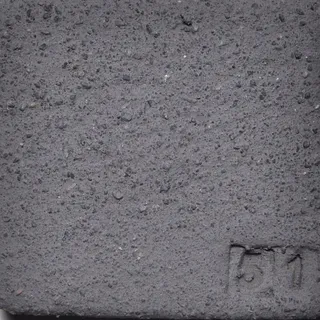 sifted and dried clay
- grain size in mm
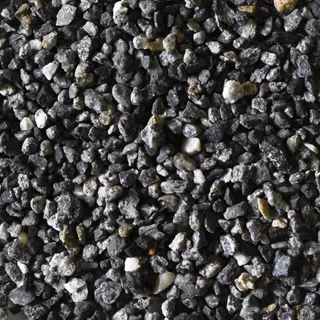 0.7 % = 1.0 mm
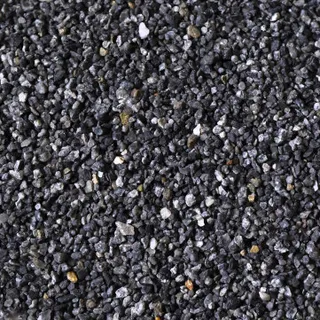 2.1 % = 0.2 mm
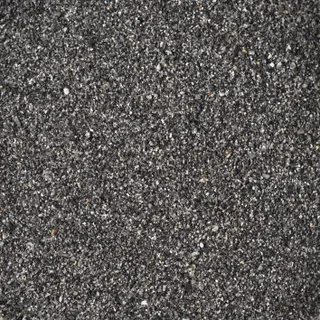 0.3 % = 0.05 mm